
How to Read Betting Odds in Ontario — American Odds Explained

Open any Ontario sportsbook app and the first thing you see is a wall of numbers with minus and plus signs in front of them: -150 here, +130 there, -110 almost everywhere. Those are American odds, and learning to read them is the single most useful skill for a new bettor in this province. Every iGaming Ontario regulated book displays American odds by default for sport wagering, so once you can read one line, you can read every line on every Ontario app.
I'm Marcus, and I cover the NHL puck line and moneyline markets for Betting Wingmen. I have placed thousands of bets across every licensed Ontario book, and I still remember how opaque the odds board looked the first week I tried to use one. The good news is there is very little to memorize — a minus sign means one thing, a plus sign means another, and once that clicks the rest is arithmetic.
This guide walks through exactly what the numbers mean, how to turn any price into a win probability, how to work out your payout before you tap "place bet," and how to compare the same line across books so you never leave value on the table. We will keep it concrete with worked dollar examples in CAD, and finish with a clean step-by-step you can run on any line you see.
Why Ontario Shows American Odds
There are three common ways to display odds around the world: American (-150, +130), decimal (2.50, 1.67), and fractional (1/2, 13/10). Ontario landed on American as the standard, and the regulated market is built around it. When iGaming Ontario brought regulated sport wagering live, American became the default display on the apps you can legally use here, which is why every book you open looks the same way.
This is genuinely helpful for new bettors. Because the format is consistent across the market, you can shop the same bet at bet365, FanDuel, or any other Ontario book without having to re-learn a new notation each time. The number you read on one app means exactly the same thing on the next one.
Decimal odds still exist, and most Ontario books let you switch the display in your settings if you want to. But American is the standard you will run into everywhere — in the apps, in previews, in the way other bettors talk about prices — so it is the format worth getting fluent in first. We will touch on decimal briefly later for context.
Reading Minus Odds — The Favourite
A minus sign in front of a number marks the favourite — the side the book expects to win more often. The number itself tells you how much you have to risk to win $100 in profit.
Take -150. That means you risk $150 to win $100. If the bet wins, you get your $150 stake back plus $100 profit, for a $250 total return. The price scales to whatever stake you actually use — you do not have to bet in hundreds. A $30 bet at -150 wins $20 profit (because $30 is one-fifth of $150, and one-fifth of $100 is $20), returning $50.
The heavier the favourite, the bigger the minus number and the less you win per dollar. A team at -110 is a slim favourite; a team at -250 is a strong one; a team at -600 is a heavy chalk where you are risking $600 to win just $100. The logic never changes: the minus number is always the amount you stake to win a $100 profit.
When you see the Maple Leafs at -160 on the moneyline against a weaker opponent, that minus tells you two things at a glance — they are favoured, and you will need to lay $160 to win $100 on them. That is the entire message of a minus price.
Reading Plus Odds — The Underdog
A plus sign marks the underdog — the side expected to win less often. The number tells you how much profit you win on a $100 risk.
Take +130. A $100 bet wins $130 profit, returning $230 total. Again it scales: a $20 bet at +130 wins $26 profit (one-fifth of $130), returning $46. The bigger the plus number, the longer the underdog and the more you collect per dollar staked. A +110 underdog is barely an underdog at all; a +130 dog is a modest one; a +450 selection is a genuine long shot paying $450 profit on a $100 risk.
Notice the symmetry with minus odds. With a minus price, the number is what you risk to win $100. With a plus price, the number is what you win on a $100 risk. Once you internalize that one distinction, you can read any American line instantly. Everything else — payouts, probabilities, comparing books — is built on top of those two rules.
When the Senators are listed at +135 as road underdogs, that plus sign tells you they are not favoured but that a winning $100 bet returns $135 in profit. Whether that price is worth taking is a separate question — the number itself is just describing the bet.
Turning Odds Into Implied Probability
Every price carries an implied probability — the break-even win rate baked into the number. This is the most useful concept in this whole guide, because it lets you judge whether a price is fair rather than just reading it.
For a minus price, implied probability is your risk divided by your total return. At -150 you risk $150 to return $250, so the implied probability is 150 ÷ 250 = 60 percent. The book is effectively saying this side wins 60 percent of the time.
For a plus price, the formula is 100 ÷ (odds + 100). At +130 that is 100 ÷ 230 = about 43.5 percent. So a +130 underdog is priced as winning a little under 44 percent of the time.
Here is the part that catches new bettors off guard: add up the implied probabilities of both sides of a market and you get more than 100 percent. A game might have one side at -130 (about 56.5 percent) and the other at +110 (about 47.6 percent), totalling roughly 104 percent. That extra few percent is the book's margin — sometimes called the vig or juice — and it is how the sportsbook makes money. The closer a book gets to a true 100 percent two-way market, the sharper its pricing, which is exactly what separates a good price from a poor one.
If you are still getting set up and want to confirm you are playing on a properly regulated app before you worry about prices, our guide on whether online betting is legal in Ontario covers iGaming Ontario, the 19+ rule, and why you need to be physically located in the province.
Calculating Your Payout — Worked Examples
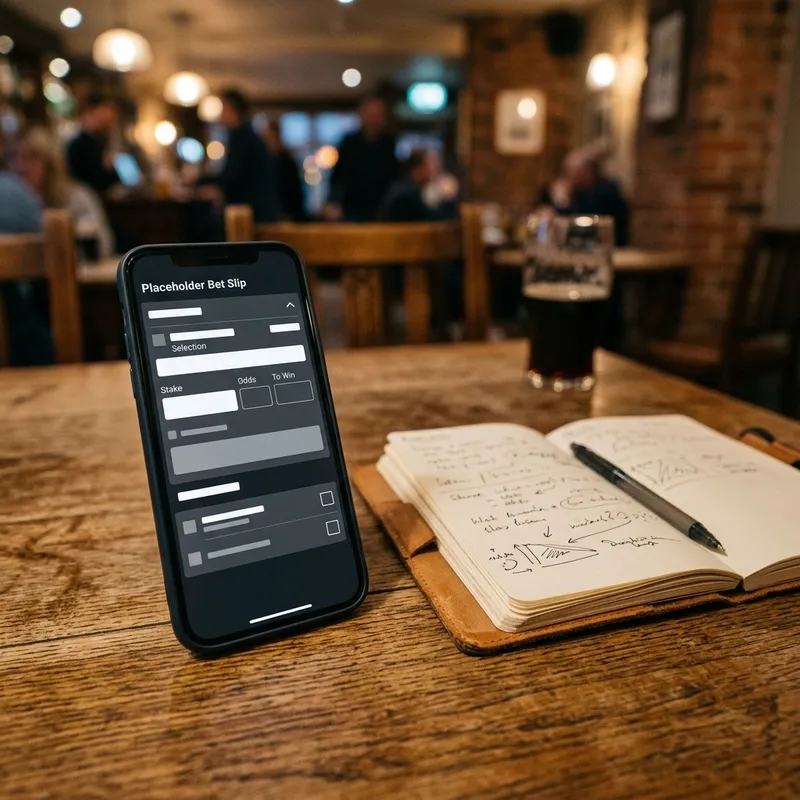
You rarely have to do this math by hand — every Ontario bet slip shows your potential return before you confirm — but understanding it makes you a far better shopper of prices. Here are the two formulas with worked dollar examples.
For a minus price: profit = stake × (100 ÷ odds). A $20 bet at -110 wins $20 × (100 ÷ 110) = $18.18 profit, for a total return of $38.18. That -110 is the standard "juiced" price you see on most point spreads and totals, so this is the calculation you will run most often.
For a plus price: profit = stake × (odds ÷ 100). A $20 bet at +150 wins $20 × (150 ÷ 100) = $30 profit, for a total return of $50. The same $20 stake returns more on the +150 underdog than on the -110 favourite, which is the whole point of a plus price — more reward for backing the less likely outcome.
Let's put a real bet on it. Say you like a $20 wager on a Leafs puck line at +150. If it cashes, you collect $30 profit on top of your $20 back, $50 total. If you had instead taken them on the moneyline at -110, that same $20 returns $38.18. Different markets, different prices, different payouts — and the bet slip will show you each figure before you commit. Your total return is always simply your stake plus your profit.
Keep the conversion table below handy until the math becomes second nature. It shows a range of common American prices, the implied probability each one carries, and the total return on a $100 bet (your $100 stake plus profit). Read across any row and you can see at a glance what a price is "saying" about the outcome and what it pays.
| American odds | Implied probability | Total return on $100 |
|---|---|---|
| -200 | 66.7% | $150.00 |
| -150 | 60.0% | $166.67 |
| -110 | 52.4% | $190.91 |
| +100 | 50.0% | $200.00 |
| +150 | 40.0% | $250.00 |
| +250 | 28.6% | $350.00 |
A couple of things to notice. At +100 — often called "even money" — a winning $100 bet returns exactly $200, your stake doubled, and the implied probability is a clean 50 percent. Anything more negative than +100 is a favourite; anything more positive is an underdog. And as you move down the table from -200 toward +250, the implied probability falls and the payout climbs, which is the fundamental trade-off in every bet you will ever place: the less likely the outcome, the more it pays.
Comparing the Same Line Across Books
Here is where reading odds turns into an actual edge. The same bet is rarely priced identically across every Ontario book. One might post a road underdog at +145 while another has the exact same selection at +135. Both are legal, both are regulated — but one pays you $10 more profit per $100 staked for the identical outcome.
Over a single bet that gap looks trivial. Over a season of wagers it is one of the very few edges a recreational bettor genuinely controls. You cannot make the favourite win more often, but you can make sure that when you do win, you are paid the best available price. This is called line shopping, and it is the most reliable habit a new bettor can build.
This is also where naming books on their merits matters. Books like bet365 and FanDuel have a reputation for sharp, consistent pricing across a wide range of markets — their two-way lines tend to sit closer to a true 100 percent, meaning less margin baked in and a better price for you on average. That is a durable reason to have them in your rotation, separate from any one night's specials. The practical move is simple: hold accounts at two or three regulated books and, when you have settled on a bet, check the price at each and take the sharpest number. It costs nothing and the difference compounds.
When you are ready to pick which books to keep in your rotation, our rundown of the best Ontario sportsbooks compares pricing, markets, and apps across the regulated field so you can decide where to line shop.
A Step-by-Step for Reading Any Line
Put it all together and reading a line becomes a quick, repeatable routine. Run these steps on any price you see on an Ontario app.
Step 1 — Check the sign. A minus means favourite; a plus means underdog. That alone tells you which side the book expects to win.
Step 2 — Read what the number means. On a minus price, the number is what you risk to win $100. On a plus price, the number is what you win on a $100 risk.
Step 3 — Find the implied probability. Minus: risk ÷ total return. Plus: 100 ÷ (odds + 100). This is the break-even win rate the price is asking of you.
Step 4 — Work out your payout for your actual stake. Minus: stake × (100 ÷ odds). Plus: stake × (odds ÷ 100). Add your stake back for the total return — or just read it off the bet slip, which does the math for you.
Step 5 — Shop the line. Before you confirm, check the same bet at your other regulated books and take the best number.
Step 6 — Decide if the price is worth it. Compare the implied probability to how likely you actually think the outcome is. If you believe it wins more often than the price implies, that is value. If not, pass — there is always another line.
Run those six steps a handful of times and they stop being steps and start being instinct. That is the moment the odds board stops looking like a wall of numbers and starts looking like a menu of bets, each one clearly priced.
Bet With a Clear Head
Knowing how to read a price makes you a sharper bettor, but it does not change the most important rule: only bet what you can afford to lose, and treat it as entertainment rather than income. Reading odds well helps you find better prices — it does not turn betting into a way to make money over the long run.
All wagering in Ontario is restricted to those 19 and older who are physically located in the province, on iGaming Ontario regulated books. Every regulated app includes responsible gambling tools — deposit limits, time-outs, and self-exclusion through BetGuard. If betting ever stops feeling fun, ConnexOntario offers free, confidential support 24/7 at 1-866-531-2600. A clear head and a good price beat a hot streak every time.
Frequently Asked Questions — Reading Betting Odds in Ontario
Why do Ontario sportsbooks show American odds instead of decimal?
American odds are the default display format on every iGaming Ontario regulated sportsbook for sport wagering. A line shows as -150 or +130 rather than 2.50 or 1.67. Most Ontario books let you switch the display to decimal odds in your account settings if you prefer, but American is what you will see out of the box and what the rest of this market uses, so it is worth learning to read it fluently.
What does -150 mean in betting?
A minus number marks the favourite and tells you how much you need to risk to win $100 in profit. At -150 you risk $150 to win $100, returning $250 total if the bet wins. Scale it to any stake: a $30 bet at -150 wins $20 profit, returning $50. The bigger the minus number, the heavier the favourite and the smaller your profit relative to your stake.
What does +130 mean in betting?
A plus number marks the underdog and tells you how much profit you win on a $100 risk. At +130 a $100 bet wins $130 profit, returning $230 total. Scale it to any stake: a $20 bet at +130 wins $26 profit, returning $46. The bigger the plus number, the longer the underdog and the more you stand to win per dollar risked.
How do I convert American odds to implied probability?
For a minus price, implied probability = risk ÷ total return. At -150 that is 150 ÷ 250 = 60 percent. For a plus price, implied probability = 100 ÷ (odds + 100). At +130 that is 100 ÷ 230 = about 43.5 percent. Implied probability is the break-even win rate baked into the price — including the book's margin — so it always totals more than 100 percent across both sides of a market.
How is my payout calculated on an American-odds bet?
On a minus price, profit = stake × (100 ÷ odds). A $20 bet at -110 wins $20 × (100 ÷ 110) = $18.18 profit, returning $38.18. On a plus price, profit = stake × (odds ÷ 100). A $20 bet at +150 wins $20 × (150 ÷ 100) = $30 profit, returning $50. Your total return is always your stake plus your profit, and Ontario sportsbooks show this in the bet slip before you confirm.
Does it matter which Ontario book I bet the same line at?
Yes. The same game can be priced differently across books — one might post a road team at +145 while another has the identical bet at +135. Over many bets, taking the better number is one of the few edges a recreational bettor controls. It costs nothing to hold accounts at two or three iGaming Ontario regulated books and bet whichever posts the sharper price on the line you want.
See our full list of verified AGCO-registered Ontarian betting sites — every sportsbook checked against the iGaming Ontario list of registered operators.
Compare Ontario Sportsbooks →19+ only. Please gamble responsibly.
Free help available: connexontario.ca | Helpline: 1-866-531-2600
Related Posts
Related Reviews