
Same-Game Parlay Guide for Ontario — How SGPs Work and Price
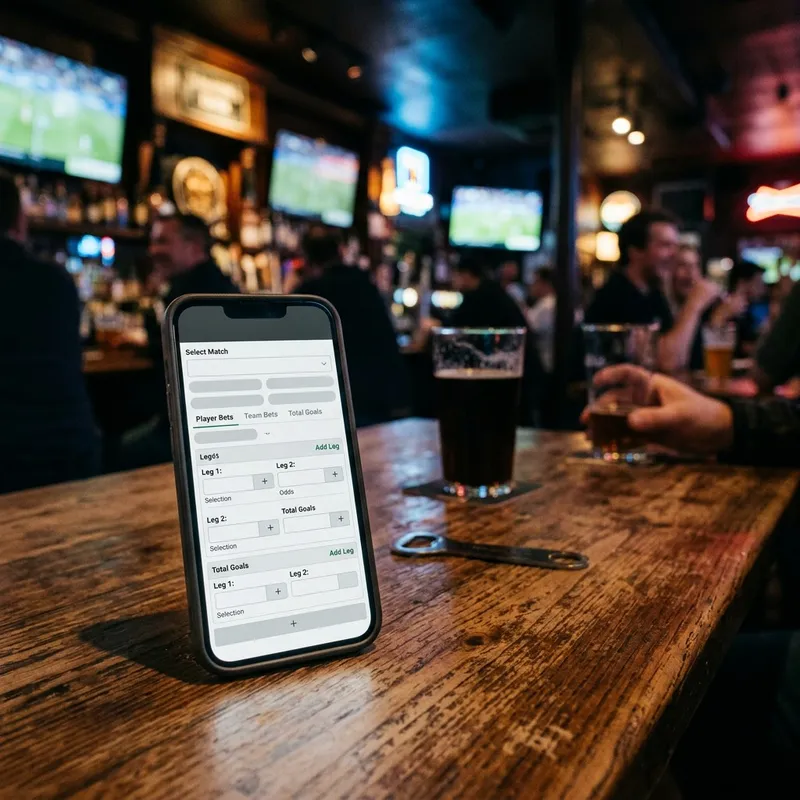
A same-game parlay — an SGP — lets you take several bets from a single game and roll them into one ticket: a team to win, the quarterback over a passing total, his top receiver over a receptions total. Every leg has to hit, and if they all do, one game pays you off. The catch is that the legs from one game affect each other, and that single fact changes how the bet is priced. Understanding why is the difference between knowing what you are actually buying and just tapping legs until the payout looks exciting.
I am Joey "The Rouge" Lalonde, and I cover football for Betting Wingmen. I have spent more Sunday afternoons than I will admit building, breaking down, and comparing SGPs across every regulated Ontario book — FanDuel, DraftKings, bet365, theScore Bet, the lot — pricing the same slip at three of them side by side just to see how far the numbers drift. The short version is that they drift a lot, and the reason comes down to one word: correlation.
In this guide I will walk through what an SGP actually is, how correlation moves the price, how to build one leg by leg, the difference between legs that help each other and legs that fight each other, which Ontario books tend to price SGPs sharpest, and a worked NFL example with real American odds. I will close with an honest note on the math, because someone has to say it: these are long-odds bets, and they should be treated that way.
What a Same-Game Parlay Actually Is
A regular parlay combines legs from different games — the Bills moneyline, an over in a second game, a spread in a third. Because those games have nothing to do with one another, the outcomes are independent, and a sportsbook can price the parlay by roughly multiplying the individual leg odds together. Win all three and you collect; miss one and the whole thing is dead.
A same-game parlay takes that idea and points it at a single matchup. Instead of three different games, you are stacking three outcomes from the same NFL Sunday game: the Bills to win, Josh Allen over 250 passing yards, and the game to go over 47.5 total points, say. The appeal is obvious — you only have to be right about one game, you can lean on a read you genuinely trust, and the payout from a single event can be substantial.
The complication is just as obvious once you think about it. Those three legs are not strangers to each other. If the Bills win comfortably and Allen throws for 320, the game probably sailed over the total too. The outcomes are tangled together, and a sportsbook cannot price tangled legs the same way it prices independent ones. That tangle is correlation, and it is the whole story behind SGP pricing.
Correlation — The Concept That Drives the Price
Correlation is just a measure of how much two outcomes move together. When two legs tend to happen at the same time, they are positively correlated. When one happening makes the other less likely, they are anti-correlated. SGP pricing lives and dies on this.
Here is the cleanest example in football. Take a quarterback over his passing-yards total and his number-one receiver over his receiving-yards total. Those are not two separate events — they are two views of the same thing. If the QB throws for a big day, a large chunk of those yards went to that receiver, so the receiver clearing his number gets much more likely. The legs help each other. If a book let you combine them at the same price as two independent bets, you would be getting paid as though they were unrelated when they very much are not.
So the book does not let you. It runs a correlation model, recalculates the true combined probability, and prices the SGP off that. The result is that a strongly correlated SGP pays less than the naive "multiply the legs" number would suggest. It is not the book being stingy — it is the book pricing reality. The flip side is real too: combine legs that fight each other and the math can actually push the price the other way, which is why some books simply block the most correlated combinations rather than let you exploit them.
The practical takeaway is that you can no longer eyeball an SGP price by multiplying leg odds in your head. The number the book gives you already has its correlation assumptions baked in. And because every book builds its own model with its own assumptions, those numbers diverge — which is exactly why shopping the same slip around matters more on an SGP than on almost any other bet you can place.
Correlated vs Anti-Correlated Legs
Sorting your legs into the ones that help each other and the ones that fight each other is the core skill of building an SGP. You want a story where the legs reinforce a single game script, not a grab-bag of outcomes that quietly cancel out.
Positively correlated legs share a script. A team winning by a comfortable margin pairs naturally with its running back going over a rushing total — teams that are ahead run the ball to bleed the clock. A high-volume passing day pairs with the top receiver going over yards or receptions. A shootout total going over pairs with both quarterbacks clearing their passing numbers. These are the combinations that make sense together.
Anti-correlated legs tell two stories at once. Backing a team to win a low-scoring defensive battle while also taking the game to go way over the total is a contradiction — both cannot comfortably be true. Taking a running back over a big rushing total while also betting his team to fall behind and throw all game is another. When you find yourself stacking legs that need different versions of the same game to come true, that is your signal to stop and rebuild.
The table below shows how this plays out across NFL and NBA. Use it as a sanity check before you confirm a slip: if your legs land mostly in the "pulls together" column, you have a coherent SGP; if they are scattered across "pulls apart," you are quietly working against yourself.
| Leg combination | Sport | Direction | Why |
|---|---|---|---|
| QB over passing yards + WR1 over receiving yards | NFL | Pulls together | The receiver collects a share of the QB's yards, so a big passing day lifts both. |
| Team moneyline + their RB over rushing yards | NFL | Pulls together | Teams in the lead run the ball to control the clock, boosting rushing volume. |
| Game over total points + both QBs over passing yards | NFL | Pulls together | A shootout pushes the total up and stuffs the passing lines at the same time. |
| Team to win low-scoring game + game over total | NFL | Pulls apart | A defensive win and a high-scoring total need two different game scripts. |
| Star to go over points + their team as big underdog | NBA | Pulls together | Trailing teams give their stars more shot volume in catch-up mode. |
| Team -10 spread + game under total | NBA | Pulls apart | A blowout usually means scoring, which fights the under. |
How to Build a Same-Game Parlay, Step by Step
Once the concept clicks, the build is straightforward. Here is the process I run every time, in order, so I am never just tapping legs and hoping.
Step 1 — Pick one game you have a genuine read on. The whole point of an SGP is concentrating on a single matchup, so start with the game you actually have an opinion about, not the game with the prettiest menu.
Step 2 — Decide on a game script. Before you add a single leg, picture how the game goes. Bills control it, Allen throws early, they pull ahead, they run late. That one-sentence script is the spine every leg should attach to.
Step 3 — Add legs that fit the script and each other. Open the game in the sportsbook's SGP builder and select your legs one at a time, watching the combined price update as you go. Lean into legs that the script and the table above tell you pull together.
Step 4 — Cut the leg that does not fit. If you find yourself adding a leg that needs a different game to come true, drop it. Discipline here is what separates a coherent SGP from a lottery ticket.
Step 5 — Price the same slip at two or three books. This is the step most people skip. Rebuild the exact slip at another Ontario book and compare the payout. The difference can be meaningful, and on an SGP it is free money to take the better number.
Step 6 — Size the stake like a long shot. Keep the stake small. An SGP is a low-probability swing, so it should be a small slice of what you are willing to spend on a given Sunday, not the bulk of it.
A Worked NFL Same-Game Parlay
Let us make this concrete with a $25 NFL same-game parlay built off a single game script: the Bills win and Josh Allen has a busy day through the air.
Leg 1 — Bills moneyline at -160. They are the favourite, and the whole slip assumes they win.
Leg 2 — Josh Allen over 250 passing yards at -115. Fits the script: if Buffalo controls the game and throws early, Allen clears 250 comfortably.
Leg 3 — Stefon Diggs-type WR1 over 70 receiving yards at -105. This is the correlated leg — a big Allen passing day means his top receiver is collecting yards.
If those three legs were independent and you just multiplied them, you would get a combined price in the neighbourhood of +330. But they are not independent — leg 2 and leg 3 lean hard on the same outcome, and leg 1 supports both. The book's correlation model knows this, so it shades the real combined price down to something more like +260. On a $25 stake, +260 returns about $90 total ($65 profit) if all three hit, versus the roughly $107 the naive +330 math implied. That gap is the correlation adjustment, and it is not the book cheating you — it is the book refusing to pay independent odds on legs that are anything but independent.
Notice what is happening to your real chance of cashing, too. Each leg on its own is close to a coin flip or better, but stack three and you need all three to land in the same afternoon. That is the honest trade at the heart of every SGP: a bigger payout in exchange for a meaningfully smaller chance of collecting.
Realistic Expectations — The Margin Compounds
Here is the part that does not make the highlight reels. A sportsbook builds a margin — its edge — into every betting market. On a single bet that margin is small and easy to live with. On a parlay, you are not paying that margin once; you are paying it on every leg, and the effect compounds as you add legs.
That is why a flashy seven-leg SGP that pays +2500 is so seductive and so rarely cashes. Every leg you tack on multiplies the number of ways the bet dies and hands the book another slice of margin. A two- or three-leg SGP where you have a real read on how the legs connect is a very different animal from a seven-leg moonshot built for a screenshot. The first is a considered bet; the second is a lottery ticket with extra steps.
None of this means SGPs are a trap to avoid. They are a legitimate, fun product, and concentrating on one game you know well is a real edge over scattering bets across games you do not. But go in clear-eyed: an SGP is a low-probability bet by design, the margin works harder against you with every leg, and no SGP is a reliable way to grow a bankroll. Treat it as entertainment with a defined budget, not as an investment.
If the basics of how parlays multiply and where the book's edge comes from are still fuzzy, start with our guide to parlay betting explained for Ontario, then come back here for the same-game wrinkle. And if you are new to betting in the province altogether, our overview of whether online betting is legal in Ontario covers the AGCO and iGaming Ontario framework before you place a dollar.
Which Ontario Books Price SGPs Sharpest
Because every sportsbook runs its own correlation model, the same slip genuinely pays different numbers at different books — so the question of which books do SGPs well is worth taking seriously.
FanDuel built much of the modern SGP product and it shows. Its same-game parlay builder is deep, the menu of combinable props is broad, and the correlation pricing is consistently competitive, which is why it is so often the benchmark Ontario bettors price everything else against. If you only opened one SGP builder, this is a defensible place to start.
DraftKings is the other heavyweight here. Its SGP menu is similarly broad, it leans hard into player props across the NFL and NBA, and it frequently lets you combine legs that thinner menus simply will not offer. Pricing the same slip at FanDuel and DraftKings side by side is the single most useful habit you can build, because the better number swings between them often enough to matter.
That said, the durable advice is not to crown one book and stop looking. The whole reason SGP pricing varies is that the models disagree, and the bettor who rebuilds the same three legs at two or three regulated Ontario books and takes the best price is the one quietly squeezing value out of a product most people just tap through.
You can line up every regulated Ontario sportsbook — markets, app quality, payout speed and SGP depth included — in our reviews section before you decide where to build.
Betting SGPs Responsibly
An SGP is a long-odds bet that pays big from one game, and that combination — high payout, low probability, fast emotional swings — is exactly the kind of bet to keep on a short leash. Set a budget before the game kicks off and treat the stake as money you are spending on entertainment, not money you expect back.
The most important discipline is the simplest: never chase a near-miss. An SGP that loses on the last leg feels like it was inches away, but it lost, and the next slip is a brand-new long shot, not a make-good. If you find yourself reloading to "get it back," that is the moment to stop.
You must be 19 or older and physically located in Ontario to bet with a regulated book. Every iGaming Ontario operator offers responsible-gambling tools — deposit limits, time-outs, and BetGuard self-exclusion across the regulated market. If betting stops being fun, ConnexOntario offers free, confidential support 24/7 at 1-866-531-2600. Use the tools before you need them, not after.
Frequently Asked Questions — Same-Game Parlays in Ontario
What is a same-game parlay?
A same-game parlay (SGP) is a single bet that combines two or more legs from one game — for example a team to win, a quarterback over a passing-yards total, and a receiver over a receptions total, all from the same NFL matchup. Every leg has to hit for the bet to pay. The difference between an SGP and a regular parlay is that all the legs come from the same event, which means the sportsbook has to account for the way those outcomes affect each other.
Why is an SGP priced differently than a normal parlay?
Because the legs are not independent. In a regular parlay across three different games, the books can roughly multiply the odds together. In an SGP, outcomes from the same game are correlated — if a quarterback throws for 320 yards, his top receiver is more likely to clear his receiving total too. Books adjust the combined price down to account for that correlation, so an SGP usually pays less than you would expect if you just multiplied the leg odds the old-fashioned way.
What is correlation in a same-game parlay?
Correlation is the degree to which two legs move together. Positively correlated legs help each other — a team winning big and its running back going over a rushing total tend to happen at the same time. Anti-correlated (negatively correlated) legs fight each other — a team winning a defensive grind-it-out game and both teams going way over the total points line pull in opposite directions. Books price correlation in, and many will not let you combine the most strongly correlated legs at all.
Do all Ontario sportsbooks price SGPs the same way?
No, and this is the single biggest reason to shop around. Every book uses its own correlation model, so the exact same three-leg SGP can pay noticeably different prices at different sportsbooks. FanDuel and DraftKings are generally regarded as building the deepest, most flexible SGP menus with sharp pricing. The practical move is to build the same slip at two or three Ontario books and take the best number before you confirm.
Are same-game parlays a good bet?
They are fun and they offer a big payout from a single game, but they are a low-probability bet by design. Every leg you add multiplies the ways the bet can lose, and the book builds a margin into each leg, so the more legs you stack the harder the math works against you over time. Treat an SGP as entertainment with a small stake, not as a reliable way to grow a bankroll. Set a budget, keep stakes small, and never chase a near-miss.
How many legs should a same-game parlay have?
There is no magic number, but the more legs you add, the lower your real chance of cashing and the more margin you hand the book. A lot of experienced bettors keep SGPs to two or three legs where they have a genuine read on how the legs connect, rather than stacking six or seven legs for a flashy payout that almost never lands. Fewer, well-correlated legs is usually the more disciplined play than a long shot built for the screenshot.
See our full list of verified AGCO-registered Ontarian betting sites — every sportsbook checked against the iGaming Ontario list of registered operators.
Compare Ontario Sportsbooks →19+ only. Please gamble responsibly.
Free help available: connexontario.ca | Helpline: 1-866-531-2600
Related Posts