
NHL Betting Guide for Ontario — How to Bet Hockey in 2026

Hockey is the one sport where Ontario bettors have a genuine home-ice edge, and most of us leave it on the table. We know the Maple Leafs and Senators rosters cold, we can tell you which fourth-liner is buried and which rookie is about to get power-play time — and then we walk up to the moneyline, take the favourite, and call it a night. The NHL gives you far more than that. The puck line, the totals, the 3-way regulation line, period markets, and a deep stack of player and goalie props are all sitting right there, and they are where the value actually lives.
I'm Marcus, the hockey wingman here, and "Top Shelf" is the column where I bet this league for a living. I've tested every Ontario book that takes a puck-line wager — how early they post Leafs and Senators props, how their prices move through the day, and, the one that matters most to me, whether they keep their live markets open and trading through a four-minute power play instead of freezing the board the second a penalty is whistled. That last test sorts the serious hockey books from the rest faster than anything else.
This is the full guide. I'm going to walk every market the NHL offers, from the moneyline to the Rocket Richard, explain when each one is genuinely value rather than just available, hand you a step-by-step for placing your first puck-line bet, and run a real worked example in CAD so you can see the math. By the end you'll know not just how to bet the NHL in Ontario, but how to bet it well.
First, the Legal Part — Betting the NHL in Ontario
Before any of the markets matter, you need to be betting on a book that's actually legal here. In Ontario that means a sportsbook registered with iGaming Ontario and licensed by the AGCO. Every brand I name in this guide is on that registered list — I don't cover grey-market offshore books, and you shouldn't use them. The registered operators are the only ones bound by Ontario's consumer protections, dispute process, and responsible-gambling requirements.
The rules are simple. You must be 19 or older and physically located in Ontario when you place the bet — the apps geolocate you, so a VPN won't get you anywhere good. Single-game wagering has been legal right across Canada since August 2021, which is the change that made all of this worthwhile: you can put a standalone bet on a single Maple Leafs game without being forced to parlay it with two other legs the way the old system demanded. And for the casual, recreational bettor, winnings in Canada are not taxed.
If you want the full breakdown of the regulatory side — how the AGCO and iGaming Ontario framework actually works and what makes a book legal here — read our explainer on whether online betting is legal in Ontario. For this guide I'm assuming you're set up on a registered book and ready to bet some hockey.
The Moneyline — Who Wins, Plain and Simple
The moneyline is the front door of NHL betting and the bet most Ontario bettors start with. You're picking which team wins the game, full stop. Overtime and the shootout count — a 3-2 shootout win pays your moneyline exactly the same as a 5-1 regulation rout. The only question is the final result.
The odds are quoted in the American format you'll see across every Ontario book. A favourite shows a minus number: the Maple Leafs at -180 means you risk $180 to win $100. An underdog shows a plus number: the Senators at +160 means a $100 bet returns $160 in profit. The bigger the gap between the two numbers, the more lopsided the book thinks the matchup is.
Here's the thing about NHL moneylines specifically: hockey is a low-scoring, high-variance sport. A worse team wins on any given night far more often than in basketball or football, because one hot goalie or a couple of bounces decide a one-goal game. That variance is why heavy favourites in this league don't get nearly as expensive as you'd expect, and why I rarely lay a big number on the moneyline. When a favourite climbs past -200, that's usually my cue to stop asking "who wins?" and start asking "by how much?" — which takes us straight to the puck line.
The Puck Line — Hockey's Point Spread, and Where I Live
The puck line is the single most important market in this guide, so slow down here. It's hockey's version of the point spread, and unlike football or basketball it's almost always frozen at a fixed 1.5 goals. The favourite is listed at -1.5; the underdog at +1.5.
If you back the favourite at -1.5, they have to win by two goals or more. A 4-1 Leafs win cashes it; a 3-2 Leafs win does not, even though the Leafs won. If you back the underdog at +1.5, they can lose by exactly one goal and you still collect — and obviously if they win outright, you collect too. So the +1.5 underdog is winning on a far wider range of outcomes than the moneyline underdog: any one-goal loss, plus every win.
Why this matters so much in the NHL: a huge share of games in this league are one-goal games, and a big chunk of those are decided by an empty-net goal in the final minute that turns a 3-2 nail-biter into a 4-2 final. That dynamic is the heart of every puck-line decision. The empty-netter is the puck-line bettor's best friend when you're on the -1.5 favourite, and the reason +1.5 underdog backers learn to sweat the last ninety seconds.
Now the value argument, which is my signature angle. Because winning by two is genuinely harder than just winning, the favourite's price on the -1.5 puck line is much longer than on the moneyline. A team at -180 on the moneyline might be +130 on the -1.5 puck line. Same team, same game — you've turned a favourite into a plus-money payout by asking for a two-goal margin instead of a one-goal win.
So when is each one value? Take the moneyline on a heavy favourite when you expect a grind — a tight, low-event game against a hot goalie where the favourite should win but probably 3-2. Take the -1.5 puck line when you genuinely expect a blowout: a rested top team against a tired opponent on the second night of a back-to-back, a backup goalie in net, a club that empties the net early and piles on. That's when the +130 is the smart side and the -180 moneyline is leaving money on the table.
Going the other way, the +1.5 underdog is the move when you like a live dog in a game you expect to stay close. You're paying a premium for the goal-and-a-half cushion — the +1.5 dog is usually a minus number — but in a league this tight, buying yourself out of one-goal heartbreak is often worth it. The discipline is matching the bet to the game you actually expect, not just grabbing the longer number because it looks pretty.
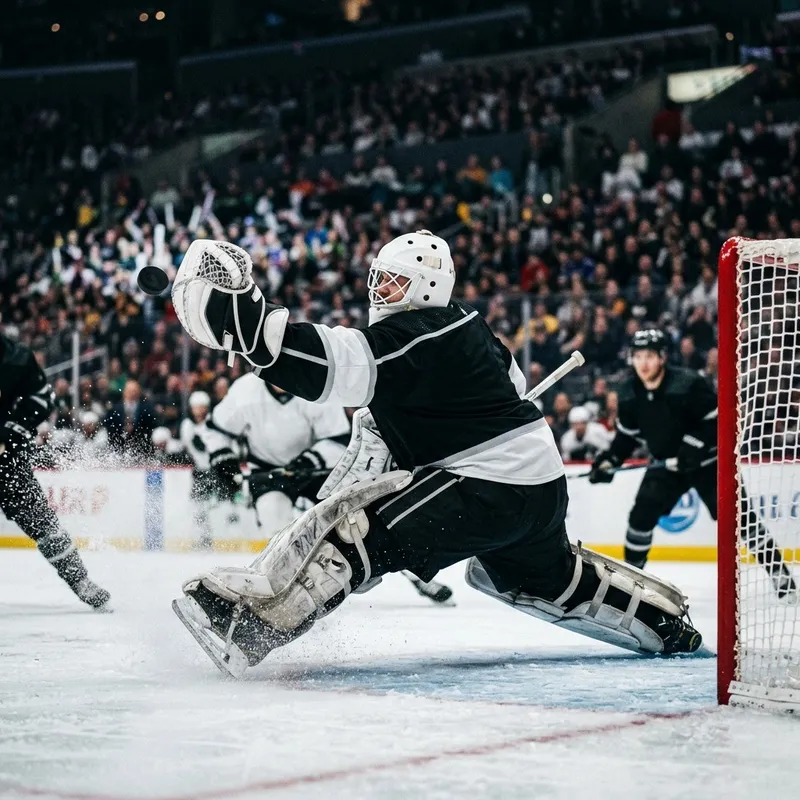
Totals — Betting the Over/Under on Goals
The total, or over/under, takes both teams out of the equation and asks one question: how many goals get scored, combined? The book posts a line — 6.5 is the classic NHL number — and you bet whether the real total finishes over or under it. Overtime and shootout goals count, with the shootout adding exactly one goal to the final for settlement purposes.
Lines move with the matchup. Two run-and-gun offences with shaky goaltending might be posted at 6.5 or even 7; a pair of defensive clubs with elite starters in net could be 5.5. The single biggest lever is the goalie. Confirmed starters are usually announced a few hours before puck drop, and a backup going in for either side can swing a total a full half-goal. That's why I never bet an NHL total until I've seen the starting goalies confirmed — betting a total blind to who's in net is just guessing.
The over/under is also where the empty-net goal cuts the other way from the puck line. A late empty-netter that pushes a game from 5 to 6 has flipped many an under into a loser in the dying seconds. Factor that in: trailing teams pull the goalie, and those games tail late. If you're leaning under in a tight one, you're quietly rooting for the team that's behind to keep their net guarded.
The 3-Way Line — Betting on Regulation Only
The 3-way line — also called the 60-minute line or the regulation line — is one of the most underused markets on the board, and one Ontario bettors who watch a lot of hockey should understand cold. Instead of two outcomes it has three: the home team wins in regulation, the away team wins in regulation, or the game is tied after 60 minutes (the Tie or Draw result).
The crucial difference from the moneyline is that everything settles on the score after exactly 60 minutes. Overtime and the shootout do not count. If you back the Maple Leafs on the 3-way line and they win 3-2 in overtime, your bet loses — the game was tied 2-2 after regulation, so the Tie result is what won. That trips people up the first time, so burn it in: the win has to come inside 60.
Because the draw is a real, live outcome — a meaningful share of NHL games are tied after regulation before OT decides them — the prices on both teams in the 3-way are noticeably longer than their moneyline. A team that's -180 on the moneyline might be +110 to win in regulation. The 3-way is value when you fancy a team to not just win but control the game and win it in 60, or when you specifically want to bet the Tie because two evenly matched clubs look headed for a low-event grind. It's a sharper instrument than the moneyline, and the longer numbers reward you for the extra precision.
Period Betting — Slicing the Game Into Thirds
You don't have to bet the whole game. Period markets let you wager on a single 20-minute frame — most commonly the first period — with its own moneyline, its own puck line (usually ±0.5), and its own total (often 1.5 or 2.5 goals).
First-period betting is the most popular slice, and it rewards homework. Some clubs are notorious fast starters who score early; others are slow out of the gate and routinely trail after one. If you know a team tends to come out flying at home, the first-period moneyline lets you bet that tendency directly without sweating the full 60. The lower scoring inside a single period also makes the ±0.5 puck line and the low totals very readable: a first-period over 1.5 just needs two goals in twenty minutes.
The other thing period markets give you is a way to bet around fatigue and game state. Tired teams on a back-to-back often fade in the third; a club protecting a lead clamps down. If you have a strong read on how a specific period is likely to play out, these markets let you express it precisely instead of diluting it across the whole game. Just remember the lines reset each period, so a first-period bet is fully settled before the second one starts.
Player Props — Goals, Shots, and Points
Player props are where I spend a lot of my hockey budget, and where Ontario bettors' roster knowledge pays off most directly. Instead of betting the game, you're betting one player's output. The three core NHL props are anytime goalscorer (does this player score at any point?), shots on goal (over/under a line such as 2.5), and points (goals plus assists, over/under a line).
The Maple Leafs and Senators give you a parade of these to read every night. An anytime goalscorer market on a Leafs top-line winger getting first-unit power-play minutes is a different bet from the same market on a checking-line centre, and the books price them accordingly. A shots-on-goal prop on a Senators defenceman who quarterbacks the power play and fires from the point can be excellent value when the matchup sets up for a lot of zone time. Points props reward you for knowing who's riding shotgun with the playmakers and who's been bumped down the depth chart.
Here's my signature angle on props, and it's about timing. Books post player props early — often the morning of a game — and then sharpen them through the day as line combinations get confirmed, projected ice time firms up, and sharp money comes in. The early number is frequently softer than the closing one. So I post my Leafs and Senators props early, before the market tightens, when I have a strong read on a player's role that day.
A concrete example: if I see in the morning skate reports that a Senators winger has been promoted to the top line and onto the first power-play unit, his shots and points props posted at that book before the news fully filters in are where the value sits. By puck drop the line will have moved. Getting there first — with a real informational reason, not just for the sake of it — is the whole edge. This is also why holding more than one account matters: different books sharpen at different speeds, and you take the price wherever it's slowest to react.
Goalie and Save Props — Betting the Last Line
Goaltender props deserve their own section because the goalie is the most important player on the ice and the books market him separately. The main goalie prop is total saves — an over/under on how many shots the netminder stops (a line like 27.5). Some books also post a shutout market and, around the margins, a goalie-to-win prop that's really just a dressed-up moneyline.
The save-total prop is a sneaky-good market because it's driven by a factor most casual bettors ignore: shot volume against, not goaltender quality. A genuinely elite goalie facing a low-volume, defensively responsible opponent might only see 22 shots and sail under his line, while a backup against a high-event shooting team gets peppered for 38 and cruises over. When you're betting saves, you're really betting how many shots the other team will generate — so read the matchup for shot volume first and goalie reputation second.
The practical workflow is the same as with skater props: wait for the confirmed starter, then read the shot environment. A confirmed starter facing a team that leads the league in shot attempts, on the back end of a back-to-back when his defence is tired and bleeding chances, is a textbook over on saves. The goalie prop rewards the bettor who watches enough hockey to know which teams throw pucks at the net and which ones grind low-event games. That's an Ontario fan's natural edge.
Futures — Stanley Cup, Divisions, and the Rocket Richard
Futures are the long game. Instead of betting tonight's result, you're betting on a season-long outcome, and the prices are live from before the puck drops on opening night all the way through the spring. The headline NHL futures are the Stanley Cup outright (which team lifts it), the conference and division winners, and the individual awards — the Rocket Richard Trophy for most regular-season goals and the Art Ross Trophy for most points.
The whole skill in futures is timing your entry. These markets move constantly. A team you rate, backed in September before the season has shown anything, can be worth several times the price you'd get on them by January once they've proven it on the ice. Same with the Rocket Richard: a sniper you believe is due for a career year is far longer in the preseason than he'll be after a hot October. The 2026-27 season opens on 29 September, and that preseason window is exactly when I take my futures positions — before the market has the information that's already in my head.
The trade-off is liquidity of your own bankroll. A Stanley Cup future placed in September doesn't settle until June, so that money is locked away for the better part of a year. That's fine if you size it as a long-term hold and not as a bet you need back quickly. I treat futures as a small, separate slice of the budget — a few considered positions I'm happy to leave alone all season — rather than something I churn.
Division and conference futures are often the sweet spot for value, because they're less heavily bet than the Cup outright and the books can be slower to adjust them. If you have a strong read that a particular team has quietly improved their roster over the summer, the division market is frequently where that read pays best. As always, line-shop: futures prices vary more between books than almost any other market, so the same Stanley Cup bet can differ by a meaningful margin from one Ontario book to the next.
A Table of NHL Markets — and When Each Is Value
Here's the whole board in one place. Use it as a quick reference for what each market actually is and the situation in which it tends to be the value play rather than just the available one.
| Market | What it is | When it's value |
|---|---|---|
| Moneyline | Pick the outright winner; OT and shootout count | A favourite you expect to win a tight, low-event game 3-2 |
| Puck line (-1.5) | Favourite must win by two goals or more | You expect a genuine blowout — rested team, backup goalie, early empty net |
| Puck line (+1.5) | Underdog can lose by one and still cash | A live dog in a game you expect to stay close to the wire |
| Total (over/under) | Combined goals vs a posted line, OT/SO count | After confirming starters — a backup in net can swing a half-goal |
| 3-way / 60-minute | Settles on the regulation score only; draw is live | You fancy a team to control and win inside 60, or like the Tie |
| Period markets | Moneyline, spread, or total for one 20-minute frame | You have a read on a fast-starting or fading team by period |
| Player props | A skater's goals, shots, or points vs a line | Posted early, before the book sharpens to ice time and lines |
| Goalie / save props | Total saves, shutout, or goalie to win | A confirmed starter facing a high-volume shooting team |
| Futures | Stanley Cup, division, Rocket Richard, Art Ross | Taken in the preseason, before the market prices in a hot start |
Live Betting — Where Hockey Gets Really Fun
In-play betting might be the single best reason to bet hockey rather than any other sport. The game moves in fast, discrete events — goals, penalties, goalie pulls — and the markets reprice hard around each one. The moneyline that was -150 before the game can be +250 two minutes after the favourite gives up a shorthanded goal, and if your read is that they'll respond, that's a real edge. Live totals, next-goal markets, and live puck lines all trade through the game, updating shift by shift.
The single thing I test books on hardest is what happens during a power play. A penalty is the highest-leverage moment in a hockey game — the scoring probability spikes for two full minutes, four on a double minor — and that's precisely when the soft books freeze. Their markets grey out, the prices lock, and you can't bet the most predictable scoring window in the sport. The serious live-betting books keep the moneyline, the total, and especially the next-goal market open and trading all the way through the man advantage. That's where the in-play money is, and a book that suspends every penalty kill is a book you can't bet hockey properly on.
When I rank the Ontario books for hockey, live-market stability through a power play is one of the first things I score, and you can see the full ranking on our hockey hub, where I lay out which books handle the NHL best across pregame and in-play. If you're still choosing your main account, our roundup of the best Ontario sportsbooks compares the full field on the things that actually matter night to night.
How to Place Your First NHL Puck-Line Bet — Step by Step
Let's make this concrete. Here's exactly how you put down your first puck-line bet on an Ontario book, start to finish.
Step 1 — Open a registered account. Sign up with a sportsbook licensed by the AGCO and registered with iGaming Ontario. Verify your identity — they'll confirm you're 19 or older — and make sure your device location services are on, because the book has to confirm you're physically in Ontario.
Step 2 — Fund the account and set your limits first. Make a deposit, then before you bet anything, set a deposit limit in the responsible-gambling tools. Doing this on day one, while you're calm and ahead of any losing run, is the smartest habit in betting.
Step 3 — Find the game and open the hockey section. Go to the NHL, pick your game — say the Maple Leafs at home — and open the full markets. You'll see the moneyline, the puck line, and the total side by side.
Step 4 — Select the puck line, not the moneyline. Tap the Maple Leafs -1.5. Notice the odds are longer than the moneyline beside it — that's the price of asking them to win by two. This is the decision: you're betting a margin, not just a win.
Step 5 — Enter your stake and read the bet slip. Type your stake into the slip. The book shows your potential return automatically. Read it back — confirm it's the -1.5 you meant and the stake is right.
Step 6 — Place it, then let it run. Confirm the bet. Now watch the game knowing exactly what you need: a two-goal Leafs win, and that late empty-netter is suddenly the most beautiful goal in hockey.
A Worked Example — A $20 Maple Leafs Puck-Line Bet
Let's run the actual math so the payout is clear, in CAD and American odds. Say the Maple Leafs are hosting a tired opponent on the back of a back-to-back, with a backup goalie confirmed in the visitors' net. The moneyline has the Leafs at -180 — a big, expensive number. But you've done the read: rested top team, weak goalie, a club that buries empty-netters. You don't just think the Leafs win. You think they win comfortably.
So instead of laying -180 on the moneyline, you take the Maple Leafs -1.5 on the puck line at -110. You stake $20.
At -110, you risk $110 to win $100, so the math on your bet is: $20 ÷ 110 × 100 = $18.18 profit. If the Leafs win by two or more — say 4-1, or 3-1 with an empty-netter making it 4-1 — your bet cashes. You get your $20 stake back plus $18.18, for a total return of $38.18.
Compare that to the moneyline. The same $20 on the Leafs at -180 would have returned just $11.11 in profit. By backing the read you already had — a multi-goal win, not just a win — you earned $18.18 instead of $11.11 on the identical outcome. That's the puck-line value angle in one bet. The catch, and you have to respect it: if the Leafs win only 3-2, the moneyline cashes and your puck line loses. The puck line pays more because it asks for more. Take it when you genuinely expect the blowout, not just because the number is prettier.
The Best Ontario Books for Hockey
I've tested every registered Ontario book on the things that matter for the NHL specifically: how early they post Leafs and Senators props, how clean their pricing is, and whether their live markets hold up through a power play. Here's where I land, on durable merits — no promos, just product.
theScore Bet is my number one for hockey, and it's not close for the Ontario fan. It's Toronto-built and unapologetically hockey-forward. The app carries the same live data, tracking, and game-following the company has been known for since long before it took bets, so watching a Maple Leafs or Senators game and wagering it in real time feels like one seamless experience rather than two apps duct-taped together. For a local hockey bettor, that integration is the whole pitch.
bet365 has the deepest live-betting tree I've found and the most reliable in-play engine through a penalty kill — its markets stay open and trading during the power play when softer books freeze, which is exactly the test I care most about. FanDuel posts clean, early player-prop markets, which suits my post-them-early angle perfectly; its props tend to go up in good time and read clearly. And Bet99 is a Canadian-built book that leans hard into hockey coverage, with a market depth that respects how much NHL action Ontario bettors actually want.
My honest advice is the same as it is for the racing folks: hold two or three accounts. The puck line on the same Leafs game can differ from one book to the next, props sharpen at different speeds, and line-shopping across a season is real money. No single book is best at everything, and the few minutes it takes to check the price across your accounts before you bet pays for itself many times over.
For the full ranking with my reasoning on each book, head to our hockey hub — it's where I keep the ordered list of which Ontario sportsbooks handle the NHL best, updated as the books change.
Bet the NHL Responsibly
Hockey season is long — 84 games per team in 2026-27 before the playoffs even start — and that grind is exactly where betting discipline gets tested. Set a budget for the season and a deposit limit on each book before you place a single bet, and never chase a bad night into a worse one. The puck line will still be there tomorrow; protect the bankroll that lets you keep betting it.
Every book I've named is registered with iGaming Ontario and licensed by the AGCO, and all of them carry the responsible-gambling tools the framework requires: deposit limits, time-outs, and self-exclusion. Use them. You have to be 19 or older and physically in Ontario to bet, and if betting ever stops being fun, ConnexOntario runs a free, confidential helpline 24/7 at 1-866-531-2600. Bet with your head. Top shelf, every time.
Frequently Asked Questions — NHL Betting in Ontario
Is betting on the NHL legal in Ontario?
Yes. If you are 19 or older and physically located in Ontario, you can bet the NHL legally through any sportsbook registered with iGaming Ontario and the AGCO. Every book I name in this guide is on that registered list. Single-game wagering has been legal across Canada since August 2021, so you can bet a standalone Maple Leafs moneyline or puck line without having to tie it into a parlay. Recreational betting winnings in Canada are not taxed for the casual bettor.
What is the puck line in NHL betting?
The puck line is hockey's point spread, and it is almost always fixed at 1.5 goals. Backing a favourite on the puck line (-1.5) means they have to win by two goals or more for your bet to cash. Backing an underdog (+1.5) means they can lose by exactly one goal — or win outright — and you still collect. Because so many NHL games are decided by a single goal, the puck line carries much longer odds than the moneyline on the same side, which is exactly where the value argument lives.
What is the difference between the puck line and the moneyline?
The moneyline asks one question: who wins the game? Overtime and the shootout count, so a 3-2 shootout win pays your moneyline. The puck line adds a 1.5-goal margin. A favourite at -180 on the moneyline might be +130 on the -1.5 puck line, because winning is easier than winning by two. The moneyline is the safer hold on a heavy favourite; the puck line is the better price when you genuinely expect a multi-goal blowout. Knowing which question you are actually answering is the whole game.
What does the 60-minute (3-way) line mean in hockey?
The 3-way line, also called the 60-minute line or regulation line, settles strictly on the score after 60 minutes of regulation. It has three outcomes instead of two: Team A wins in regulation, Team B wins in regulation, or the game is tied after 60 (the Tie/Draw result). Because the draw is a live possibility, the prices on both teams are longer than their moneyline. If you back a team here and they win in overtime or the shootout, the bet loses — the win has to come inside regulation.
Which Ontario sportsbook is best for NHL betting?
theScore Bet is my number one for hockey. It is Toronto-built, deeply hockey-forward, and its app integrates the same live data and tracking the company is known for, which makes following a Maple Leafs or Senators game and betting it in real time genuinely smooth. bet365 has the deepest live-betting tree and the most reliable in-play uptime through a penalty kill. FanDuel posts clean, early player-prop markets, and Bet99 is a Canadian-built book that leans hard into hockey coverage. Most serious NHL bettors hold two or three accounts to line-shop the same bet.
Can I bet NHL games live in Ontario?
Yes, and live (in-play) betting is one of the best reasons to bet hockey specifically. Odds update shift by shift, and the markets reprice dramatically around goals, penalties, and goalie pulls. The key thing to check is whether a book keeps its markets open and priced during a power play — many freeze the moment a penalty is called. The books with the strongest live engines keep moneyline, totals, and next-goal markets live and trading through a full four-minute double minor, which is when the sharpest in-play value appears.
What are the best NHL futures markets to bet?
The headline futures are the Stanley Cup outright, conference and division winners, and individual awards like the Rocket Richard Trophy (most regular-season goals) and the Art Ross (most points). Futures are posted before the season and move all year, so an early position taken in September on a team or scorer you rate can be worth far more than the price you would get in the new year. The trade-off is that your stake is tied up for months, so size these as long-term holds, not quick turns.
How do NHL player props work?
Player props are bets on an individual's output rather than the game result. The common NHL props are anytime goalscorer, shots on goal (over/under a line like 2.5), and points (goals plus assists). Goalie props cover total saves and sometimes a shutout market. The value in props comes from betting them early, before the book sharpens the line against matchup, line combinations, and projected ice time. Posting a Leafs or Senators shots prop the morning of a game, before the market tightens it through the day, is one of my favourite recurring angles.
Marcus has the full hockey playbook for Ontario — the puck line, Maple Leafs and Senators props, and which sportsbooks keep their live markets open through a power play.
Read Our theScore Bet Review →19+ only. Please gamble responsibly.
Free help available: connexontario.ca | Helpline: 1-866-531-2600
Related Posts